
Why Startups Choose Co Working Over Traditional Offices
The decision usually comes down to three things: cost, flexibility, and focus.
Lower Upfront Investment
Setting up a traditional office requires significant capital. You need to pay a security deposit, often equivalent to several months of rent. You need to buy or lease furniture. You need to arrange internet, electricity, water, cleaning, and maintenance. You may also need to invest in branding, signage, and office equipment.
For a startup, that money could be used for product development, hiring key team members, marketing, or customer acquisition.
Co working spaces remove most of these upfront costs. You pay a monthly fee that typically covers:
Desk or office space
High speed internet
Utilities such as electricity and air conditioning
Office furniture
Meeting room access
Cleaning and maintenance
Sometimes reception and mail handling
This predictable monthly expense makes financial planning easier and reduces the risk of being locked into a long term lease before the business is stable.
Flexibility to Scale Up or Down
Startups rarely follow a straight growth path. Some months are busy. Some are slow. Teams expand when funding comes in. They may consolidate when priorities shift.
A traditional office lease does not adjust easily to these changes. If you sign a three year lease for a 20 person office but your team is only 8 people, you are still paying for empty seats. If your team grows to 30, you either cram people in or go through the hassle of finding a new office.
Co working spaces are designed for flexibility.
You can start with a small private cabin for your core team. As you hire, you can add more desks or move to a larger cabin. If you need to reduce space, you can do so without breaking a long term lease or losing a large deposit.
This ability to scale up or down quickly is one of the biggest reasons startups prefer co working.
Focus on Building the Business
Running an office is a full time job in itself. Someone needs to handle rent payments, utility bills, internet issues, furniture repairs, cleaning schedules, security, and day to day operational problems.
For a startup founder, that is time and energy taken away from product, customers, and growth.
In a co working space, most of these responsibilities are handled by the operator. If the internet goes down, there is support. If you need a meeting room, there is a booking system. If the office needs cleaning, it is part of the service.
This allows the founding team to focus on what actually moves the business forward instead of getting stuck in facility management.
How Co Working Supports Early Stage Startups
Beyond cost and flexibility, co working spaces offer specific advantages that align well with the needs of early stage companies.
Built In Networking Opportunities
Startups do not grow in isolation. They need mentors, partners, clients, freelancers, and sometimes even co founders.
A co working space puts you in daily contact with people from different backgrounds. You may sit near a freelance designer you can hire for a project. You may meet a marketing consultant who can help with your go to market strategy. You may connect with another founder who has already solved a problem you are facing.
These interactions do not always happen through formal events. Often, they happen in the pantry, during a coffee break, or while waiting for a meeting room.
Some co working spaces also organise workshops, founder meetups, investor sessions, and skill building events. For a startup, these can be valuable learning and networking opportunities without extra cost.
Professional Environment for Client Meetings
First impressions matter. When you meet a potential client, partner, or investor, the setting can influence how they perceive your business.
Working from home or a crowded cafe may be fine for internal work, but it is not ideal for important meetings. A co working space gives you access to professional meeting rooms, reception areas, and a business like environment.
You can host client presentations, conduct interviews, run workshops, or hold team discussions in a space that looks and feels professional. This helps build credibility, especially for early stage startups that may not have a well known brand yet.
Better Work Culture and Accountability
Working from home can be comfortable, but it can also blur the line between work and personal life. For a startup team, maintaining discipline and accountability is crucial.
A co working space creates a clear separation. You come to work, you leave work. The environment itself encourages focus. Seeing other teams working, pitching, building, and growing creates a sense of momentum.
For small teams, this kind of atmosphere can improve productivity and create a healthier work culture. It becomes easier to maintain routines, set boundaries, and treat the business like a real company from day one.
What Kind of Workspace Do Startups Need?
Not every startup needs the same type of co working setup. The right choice depends on team size, work style, and growth plans.
Private Cabins for Core Teams
Most early stage startups benefit from having a private cabin or small enclosed office within a co working space. This gives the team:
Privacy for discussions and strategy calls
A dedicated area to keep whiteboards, notes, and product materials
A sense of identity and ownership over the space
Fewer distractions compared to open desks
Private cabins are ideal for teams of 2 to 10 people who need to collaborate closely but still want the flexibility and amenities of a co working environment.
Hot Desks for Freelancers and Part Time Members
Not everyone in a startup needs a fixed seat. Some team members may work remotely and come in occasionally. Some may be freelancers or interns who do not require a permanent desk.
Hot desks or shared seating options allow startups to reduce costs while still giving team members access to the workspace when needed.
Meeting Rooms and Event Spaces
Startups often need meeting rooms for:
Client presentations
Investor discussions
Team brainstorming sessions
Product demos
Workshops and training
Having access to well equipped meeting rooms without paying for them 24x7 is a significant advantage. Most co working spaces offer meeting rooms on a pay per use basis or as part of the membership plan.
24x7 Access for Intense Work Periods
Product launches, funding rounds, and critical deadlines can lead to late nights and irregular hours. Some co working spaces offer 24x7 access, allowing teams to work according to their own schedule.
This is especially useful for tech startups, agencies, and product teams that may need flexible working hours.
Cost Comparison: Co Working vs Traditional Office
While exact numbers vary by city and provider, the general pattern is clear.
A traditional office usually involves:
Long term lease (1 to 5 years)
Security deposit (often 3 to 10 months of rent)
Furniture and interior costs
Separate utility and internet bills
Maintenance and cleaning expenses
Time and effort spent on setup and management
A co working space usually involves:
Short term or flexible membership (monthly or quarterly)
Minimal or no security deposit
Fully furnished workspace
All inclusive monthly fee covering internet, utilities, and maintenance
Ready to move in within days
For startups, the co working model reduces financial risk and frees up capital for growth related activities.
How to Choose the Right Co Working Space for Your Startup
Not every co working space is a good fit. Before signing up, consider these factors.
Location and Accessibility
Choose a location that is convenient for your team and clients. A space that is difficult to reach can become a daily burden.
Look for:
Easy road access
Parking availability
Nearby public transport
Proximity to your target market or business hubs
Internet and Infrastructure
Reliable internet is non negotiable for most startups. Test the connection during a visit. Check whether video calls, large file uploads, and cloud tools work smoothly.
Also check power backup, seating comfort, meeting room quality, and overall maintenance.
Community and Culture
Some co working spaces focus heavily on community, events, and networking. Others prioritise quiet, focused work.
Think about what suits your team. If you want regular interaction with other founders, choose a space with an active community. If your work requires deep concentration, look for a quieter environment.
Flexibility of Plans
Review the membership terms carefully. Check:
Notice period and lock in duration
Options to add or reduce seats
Meeting room usage and pricing
Access hours
Any hidden charges
A good co working partner should make it easy to adjust your space as your startup grows.
Co Working as a Strategic Choice for Startups
For many founders, co working is not just a temporary arrangement until they can afford a real office. It is a strategic choice that supports how modern startups operate.
It allows them to:
Launch faster without waiting for office setup
Control fixed costs in the early stage
Stay flexible as the team and business evolve
Access professional infrastructure without heavy investment
Build a network of mentors, partners, and potential clients
Maintain focus on product and customers instead of facility management
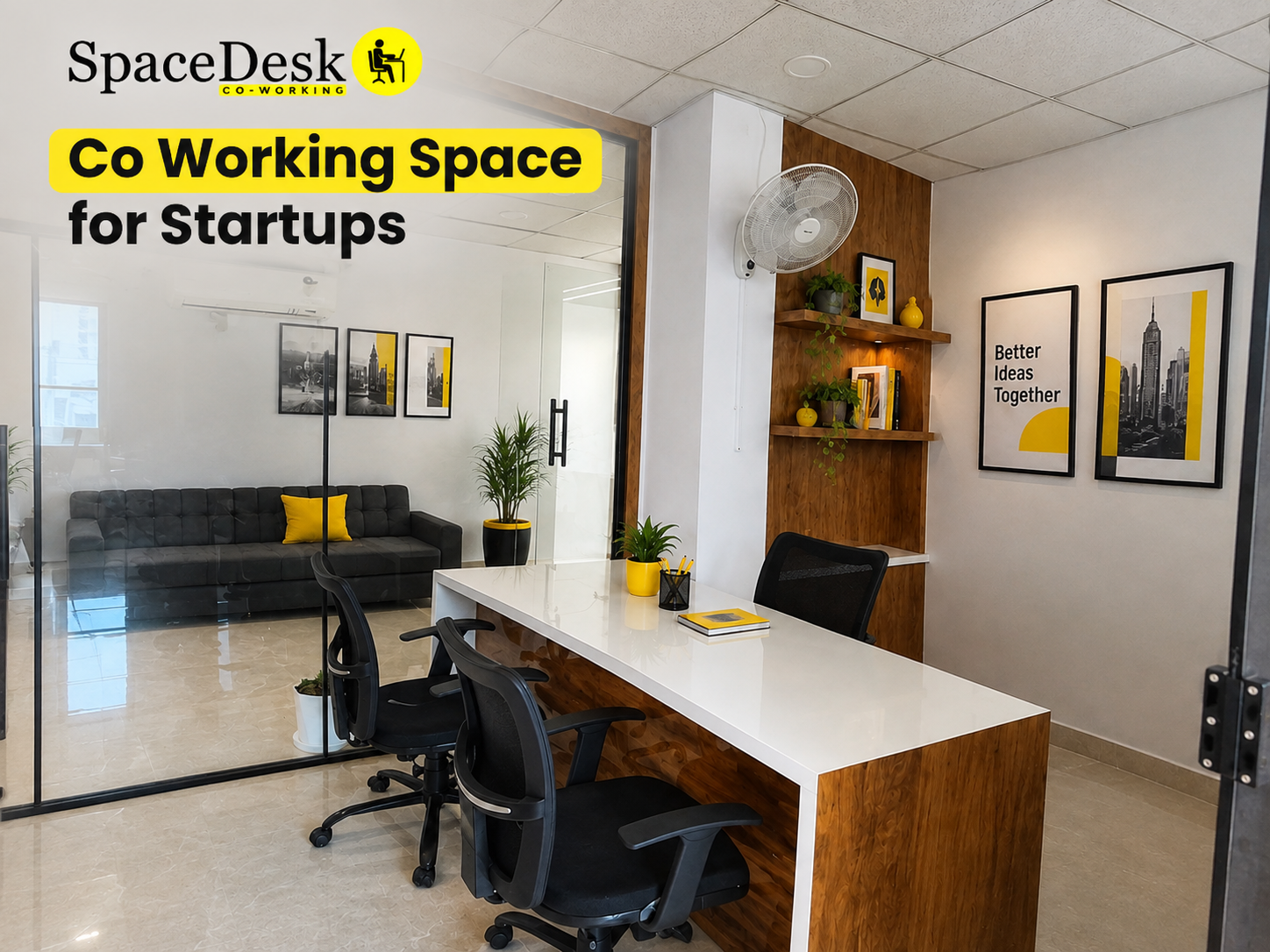
Spaces like SpaceDesk, located near Aashima on Narmadapuram Road in Misrod, Bhopal, are designed to support this kind of work environment. They offer high speed Wi Fi, comfortable seating, power backup, reserved desks, secure storage, and a professional shared workspace setup that suits freelancers, remote teams, and early stage startups.
Final Thought
A startup does not need a fancy office to succeed. It needs a workspace that supports its goals, fits its budget, and grows with the team.
Co working spaces provide exactly that. They remove the burden of traditional office management while giving startups the infrastructure, flexibility, and environment they need to focus on building something meaningful.
For founders who want to move fast, stay lean, and keep their energy on the business instead of the building, a co working space is often the smarter choice.