
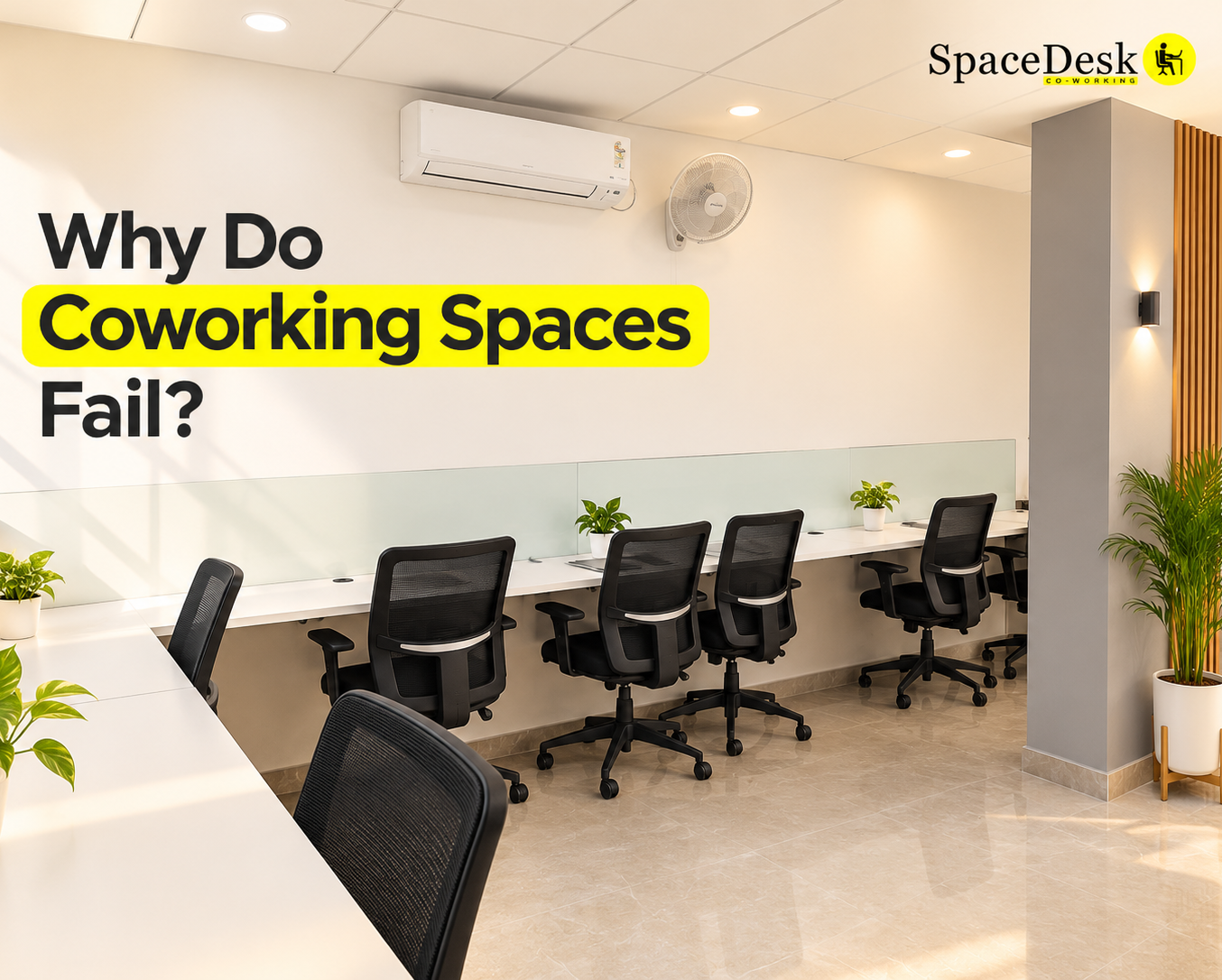
They Open Without Understanding Local Demand
One of the biggest mistakes is assuming that every area needs a coworking space.
A city may have freelancers, startups, remote employees, and small businesses. That does not automatically mean they are willing to pay for a shared workspace. The key question is whether there are enough people in that location who need a professional workspace regularly and can afford the membership plans.
For example, a coworking space near a business district may attract consultants, sales teams, agencies, and remote employees. A space near colleges may attract students and early stage founders. A neighbourhood with many residential properties may have demand from people who work remotely but do not want to travel far.
These are different audiences with different expectations.
Before opening, operators need to understand:
Who will use the space most often
What type of work they do
How much they are willing to spend
Whether they need hot desks, dedicated desks, private cabins, or meeting rooms
What nearby coworking spaces already offer
Whether there is an unmet need in the local market
A coworking space cannot rely only on the belief that flexible work is growing. It needs real local demand.
Poor Location Can Hurt Even a Good Space
Location is more than having an address in a popular area.
A coworking space may be beautifully designed, but if it is difficult to reach, has no parking nearby, lacks public transport access, or sits in an area people do not feel comfortable visiting, it will struggle to attract regular members.
For a freelancer or remote employee, the daily commute matters. If getting to the space takes too much time or effort, working from home starts to feel like the easier option.
The same applies to client facing professionals. Consultants, designers, agencies, lawyers, accountants, and business owners often need to meet clients. They want a location that is easy to explain, easy to reach, and professional enough to make a good impression.
A good coworking location usually has:
Easy road access
Parking availability or nearby public transport
Clear visibility and signage
Nearby food, banking, or convenience options
A safe and comfortable surrounding area
Access that suits the working hours of members
A premium location alone does not guarantee success. But a poor location can make everything else harder.
They Focus on Interiors and Ignore Functionality
A stylish coworking space can attract attention online. Great lighting, modern furniture, colourful walls, and aesthetic lounges look good in photos.
But members do not pay month after month for photos. They pay because the space helps them work.
If Wi Fi drops during video calls, chairs are uncomfortable, power points are limited, meeting rooms are always occupied, or noise levels make it difficult to concentrate, members will start looking elsewhere.
Coworking spaces fail when they are designed for first impressions instead of daily use.
A productive workspace needs to support different kinds of work. Someone writing content needs quiet. A sales professional needs a place for calls. A small team may need room for discussion. A freelancer meeting a client needs privacy and professionalism.
A good coworking setup should include:
Reliable high speed internet
Comfortable desks and ergonomic seating
Enough charging points
Quiet areas for focused work
Meeting rooms for team discussions and client meetings
A clean and well maintained environment
Power backup for uninterrupted work
Spaces where members can take calls without disturbing others
At SpaceDesk, the focus is on practical work essentials such as high speed Wi Fi, comfortable seating, power backup, reserved desks, secure storage, and a professional shared workspace environment for freelancers and remote employees.[spacedesk]
Weak Pricing Can Destroy the Business
Pricing is one of the most difficult parts of running a coworking space.
Some operators set prices too low because they want to attract members quickly. It may work at first. People like affordable plans. But low prices can create a serious problem if they do not cover rent, salaries, electricity, internet, maintenance, cleaning, software, marketing, and other everyday costs.
A full coworking space is not always a profitable coworking space.
If every desk is occupied but the membership fee is too low, the operator may still struggle to make money. On the other hand, pricing too high without offering enough value can push potential members towards competitors, home offices, or cafes.
The right pricing needs to reflect both the local market and the real cost of running the workspace.
Instead of relying on one low cost membership, coworking spaces can create different plans for different needs.
For instance:
Day passes for occasional users
Flexible desks for freelancers
Dedicated desks for regular members
Private cabins for small teams
Meeting room bookings for teams and client discussions
Virtual office services for businesses that need a professional address
The goal is not to be the cheapest option. The goal is to provide fair value while keeping the business sustainable.
They Build a Space but Not a Community
A shared office without a sense of community is just an office with multiple tenants.
People can work from home, a cafe, a library, or their own small office. Coworking becomes more valuable when members feel connected to the place and the people around them.
That does not mean every coworking space needs loud networking events every week. Not everyone enjoys that. Some people join coworking spaces mainly for focus, routine, and a better work environment.
But members should still feel welcome.
They should know who to speak to if they have an issue. They should be introduced to useful people when there is a genuine opportunity. They should feel comfortable taking breaks in common areas. They should not feel like they are simply renting a chair.
Community can be built through simple things:
A warm welcome when a new member joins
Regular check ins with members
Small networking sessions or workshops
Relevant introductions between professionals
Celebrating member achievements
Asking for feedback and acting on it
Creating a respectful and helpful work culture
Members who feel connected are more likely to stay longer and recommend the space to others. Coworking works best when people see value beyond the desk.
Poor Member Retention Creates a Constant Struggle
Many coworking operators put all their energy into getting new members. They run ads, offer discounts, post on social media, and chase leads.
Marketing matters. But keeping existing members matters just as much.
If members join for one month and leave soon after, the business ends up spending too much time replacing them. This creates a cycle where desks are filled, then empty, then filled again.
High occupancy can look good from the outside, but it does not always show whether members are happy or whether the business is stable. Long term members create more reliable income, stronger word of mouth, and a more active community. Research from coworking operators also shows that retention, not just desk occupancy, is a key indicator of a sustainable workspace business.
Members may leave for reasons that do not always appear in a formal complaint. They may feel ignored. They may be frustrated by Wi Fi issues. They may dislike billing confusion. They may find the space too noisy. Or their needs may have changed and there may be no suitable plan for them.
To improve retention, coworking operators need to ask better questions.
Are members renewing their plans
Which plans have the highest cancellations
Why do people leave
Are new members using the facilities properly
Are they aware of meeting rooms, community events, or other services
Do they feel the pricing matches the value they receive
A short conversation can sometimes prevent a cancellation. But that only happens if the operator notices the issue early enough.
The Wrong Mix of Workspaces
Not everyone needs the same kind of coworking setup.
Some people need an affordable hot desk for a few days a month. Some want a fixed desk where they can work daily. Small teams often need private cabins. Consultants may need meeting rooms. Remote employees may need quiet spaces for online calls.
A common mistake is filling most of the office with open desks and then realising that members are constantly asking for more private cabins, phone booths, or meeting rooms.
The right mix depends on the target audience.
If the space serves mainly freelancers, flexible desks and quiet work areas may be in high demand. If it serves startups and small businesses, private cabins and meeting rooms may become more important. If many members work remotely for companies in other cities, video call friendly spaces become essential.
Operators should not guess. They should track what people ask for and adjust the workspace over time.
A coworking space needs to evolve with its members. The layout that works in the first year may not be the layout that works later.
Poor Operations Slowly Damage Trust
Some coworking problems look small at first.
A meeting room gets double booked. A member receives the wrong invoice. The Wi Fi password changes without clear communication. A maintenance problem is ignored for too long. A visitor arrives and nobody knows how to help them.
Individually, these issues may not seem serious. Repeated over time, they make the space feel disorganised and unprofessional.
Members pay for convenience. They should not have to spend their workday chasing the manager for basic things.
Good operations are often invisible when they work well. Members should be able to enter the space, find their desk, connect to Wi Fi, book a meeting room, receive support, and continue with their work without unnecessary friction.
A coworking operator needs clear systems for:
Membership billing
Desk and meeting room booking
Internet and technical support
Visitor management
Cleaning and maintenance
Member communication
Access control
Feedback and complaint handling
When operations are messy, the team becomes stressed. When the team is stressed, members can feel it. Over time, the experience gets weaker.
They Depend Only on Walk In Customers
A coworking space cannot depend only on people passing by the building.
Walk ins can be useful, especially in a visible location. But they are not a reliable growth strategy. There may be slow months, road construction nearby, changing local business activity, or new competition.
Strong coworking spaces build a steady lead pipeline.
This can include:
A website that clearly explains plans and facilities
Local SEO for searches such as coworking space in Bhopal
Google Business Profile updates and reviews
Social media content that shows the workspace honestly
Referral programs for current members
Partnerships with local businesses and startup communities
Follow up after tours and enquiries
Content that answers common questions from potential members
The best marketing does not only say that the space has desks and Wi Fi. It explains how the workspace solves a real problem.
For a freelancer, that could be distractions at home. For a startup team, it could be avoiding a long office lease. For a remote employee, it could be needing a professional space for online meetings.
They Ignore Feedback Until It Is Too Late
Members usually do not leave without signals.
They may stop visiting regularly. They may stop booking meeting rooms. They may ask the same question more than once. They may become less engaged. Or they may quietly compare other workspaces before deciding not to renew.
When feedback is ignored, small issues become bigger problems.
A coworking space should make it easy for members to speak honestly. This can happen through informal conversations, quick surveys, feedback forms, or monthly check ins.
The important part is not collecting feedback. It is responding to it.
If members say the space is too noisy, look at the seating layout or create quiet zones. If they need more meeting room time, review bookings and capacity. If they find plans confusing, simplify the communication. If they want better coffee, that may seem minor, but small comforts can shape the daily experience.
Members notice when their feedback leads to actual improvement.
Successful Coworking Is About More Than Filling Desks
Coworking spaces fail when operators focus only on occupancy and forget the bigger picture.
A successful workspace needs the right location, the right audience, realistic pricing, reliable operations, a useful mix of workspaces, and a genuine member experience. It needs to solve real working problems, not just offer a stylish place to sit.
The strongest coworking spaces understand that people are not only looking for a desk. They are looking for focus, flexibility, comfort, professionalism, and a work environment they can trust.
When a coworking space gets those basics right, it becomes more than a shared office. It becomes a place where freelancers, remote workers, small teams, and growing businesses can do their best work.